
Self-Publishing Children’s Books on Amazon KDP UK: My Proven Formula for Success
If you’ve ever flicked through a picture book at bedtime and thought “I could write something better than this,” you’re not alone. I had that exact thought more times than I can count before I actually sat down and did something about it.
Amazon KDP makes it possible to go from idea to published book without a literary agent, a publishing deal, or a huge upfront cost. But “possible” and “easy” aren’t the same thing, and there’s a lot nobody tells you before you start. This is everything I wish someone had told me.
In this post, you’ll learn:
- How to actually get set up on Amazon KDP UK, including the tax form most people trip up on
- What makes a children’s book actually sell, not just look nice
- How to price and format your book so you’re not leaving royalties on the table
- The realistic timeline and income you can expect in your first year
Getting Started With Amazon KDP UK

Setting up your KDP account itself is genuinely simple, you’ll need your name, UK address, and bank details so Amazon can pay your royalties. Where people get stuck is the tax interview.
The Tax Form Nobody Warns You About
Because KDP is run through Amazon’s US entity, every author, regardless of where you live, has to complete a US tax interview before you can publish. As a UK-based author, you don’t need to apply for a US tax number, you simply complete a W-8BEN form inside your KDP account using your own UK tax reference (your UK Unique Taxpayer Reference (UTR) if you’re registered for Self Assessment, or your National Insurance number if you’re not yet registered — KDP will indicate which it needs based on your answers in the tax interview), which confirms you’re a UK taxpayer and reduces your US withholding tax to 0% under the UK-US tax treaty, rather than losing 30% of every royalty to US tax before it even reaches you.
Whatever you earn from KDP still counts as self-employment income here in the UK, so you’ll need to declare it to HMRC through Self Assessment if your total self-employed earnings go over the £1,000 trading allowance in a tax year.
Understanding KDP Royalties
You’ll choose between two royalty options when you publish:
- 70% royalty: available for ebooks within Amazon’s current qualifying price band on the UK marketplace (this band changed in mid-2026, so check the exact current £ figures in your own KDP dashboard under pricing before you set your price, rather than relying on any guide, including this one)
- 35% royalty: available at any price point, but obviously earns less per sale
Most children’s picture books do better as paperback or hardback anyway, since that’s how parents actually buy them, and print royalties work differently again: you earn list price minus printing cost minus Amazon’s share, so pricing your book correctly matters even more with print.
What Actually Makes a Children’s Book Sell
Plenty of children’s books are beautifully written and go absolutely nowhere. Here’s what I’ve learned separates the ones that sell from the ones that don’t.
A Story With One Clear Idea
The best-performing children’s books I’ve worked on all have one thing in common: you can explain what they’re about in a single sentence. A worry monster who shrinks when you talk about your feelings. A dog who’s scared of the dark but helps someone else through theirs. Pick one idea, and don’t try to teach five lessons in 500 words.
Illustrations You Don’t Compromise On
Unless you’re a trained illustrator yourself, this is where I’d tell you to spend the money rather than cut corners if you possibly can. A polished story with amateur illustrations gets scrolled past. Sites like Reedsy and 99designs both have illustrators who specialise in children’s books, and it’s worth asking to see a full sample spread, not just a cover mockup, before committing.
That said, I know “just hire someone” isn’t realistic for everyone starting out, and there’s no shame in beginning on a tighter budget. Here’s what I’d actually consider, depending on where you are:
- Canva: genuinely useful for a simple cover if you’re just getting started, though it won’t give you the same polish or full custom illustration a dedicated designer would for the interior pages
- Fiverr or Upwork: both have illustrators at a much wider range of price points than the big-name design sites, some genuinely talented freelancers are building up their portfolio and charge accordingly, just check reviews and ask for samples in a similar style to what you want before paying anything
- DIY cover generators: I’d be cautious with these specifically for covers, since the results tend to look generic and can actually hurt sales rather than help, this is the one area I wouldn’t recommend cutting corners on if you can avoid it at all
- Adobe Photoshop or Procreate: only worth it if you’re planning to illustrate yourself and are willing to learn the software properly, there’s a real learning curve
The honest advice is: spend where it matters most (the actual illustrations children will look at on every page) and save where you can (a Canva-built cover is a reasonable compromise if the interior art is strong).
Formatting That Doesn’t Fight the Reader
For picture books specifically, KDP has strict guidelines on trim size, bleed, and margins for print, get this wrong and your file gets bounced back at review, which delays your launch. For text-heavy formatting (early readers, chapter books), keep line spacing generous and font size larger than you’d use for adult fiction, ideally 14-16pt.
Designing a Cover That Actually Gets Clicked
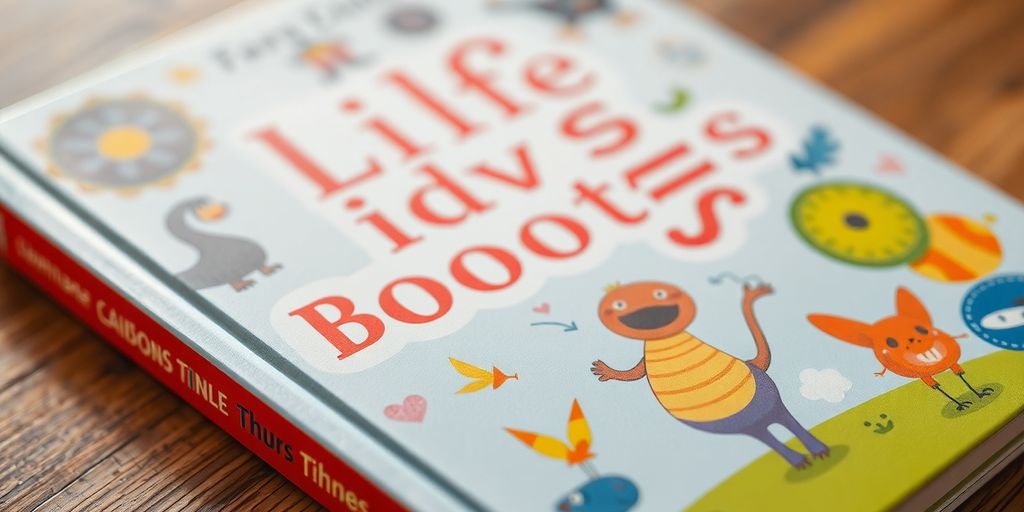
Your cover has to work at thumbnail size on a phone screen, since that’s how most parents are browsing. Bright, high-contrast colours read better than soft pastels when shrunk down. Your title needs to be legible even at a glance, and your name should be visible but not competing with the title for attention.
Getting Your Book Found on Amazon
A beautiful book that nobody can find won’t sell. This is the bit most new self-publishers skip, and it’s the difference between a book that sells a handful of copies to friends and one that keeps selling months later.
Keywords and the 7 Slots You’re Not Using
KDP gives you seven keyword fields when you publish, and most people fill in two and stop. Think about what a parent would actually type: “bedtime story about feelings for toddlers” rather than just “children’s book.” Amazon’s own search bar autocomplete is a free research tool, start typing a relevant phrase and see what it suggests.
Getting Into the Right Categories
You get three category slots per format (so a book published as both ebook and paperback actually gives you six placements to work with, not three). You choose these directly in your KDP dashboard from Amazon’s own store categories, the older system where you’d email support asking for extra categories was retired back in 2023, so don’t waste time trying that route.
What most people don’t realise is that your seven keyword slots can also nudge Amazon into placing your book in additional browse categories beyond your three chosen ones, if a keyword closely matches a specific category Amazon recognises. It’s worth checking where your comparable titles are actually categorised and working backwards from there.
What Income Actually Looks Like
I want to be straight with you here, because a lot of KDP content oversells this. Most authors earn a modest amount in year one, often just a few hundred pounds across their whole catalogue, and it builds from there as you publish more titles and your back catalogue starts working together. It’s rarely one book that changes things, it’s the fifth or sixth book making the first one sell better too.
Daisy’s Take 💛
I’ve now published more than 40 books on Amazon KDP across children’s books, activity books, colouring books, journals and planners. Looking back, I definitely made plenty of mistakes in the beginning.
I worried too much about publishing quickly instead of researching properly. I underestimated how important keywords, categories and cover design really are. Some of my earlier books were priced too low, while others simply weren’t aimed at a market with enough demand.
The biggest lesson I’ve learned is that KDP isn’t about creating the book you like most. It’s about creating a book that genuinely solves a problem or gives readers exactly what they’re searching for.
Today, before I create anything, I spend much more time researching the niche, analysing competitors, refining my cover, choosing better keywords and thinking carefully about who the book is actually for.
Has every book become a bestseller? Absolutely not.
But every single book has taught me something, and each new one is better than the last because of those lessons.
KDP has become one of several income streams I’m building alongside my Etsy shop, this blog, TikTok affiliate marketing and long-term property investment. None of them happened overnight — but together they’re helping me build the freedom and flexibility I always wanted as a single mum.
You can find my full catalogue of books under my publishing name, CraftyVibes Publishing on Amazon UK. If you’re just getting started, don’t compare your first book to someone else’s hundredth. Publish, learn, improve and keep going. That’s exactly how I got here.
It’s a Slow Build, Not a Lottery Ticket
Self-publishing on KDP isn’t a quick win, and if anyone tells you otherwise they’re not being honest with you. But it is genuinely achievable alongside single parenthood, a day job, or anything else you’ve got going on, because you work on it in the gaps, not all at once.
If you haven’t already sorted your budget for the months where book income is slow to start, it’s worth reading Single Mum Budget UK Guide first, so this feels like a bonus, not pressure.
What’s stopping you from starting your first draft this week?
Frequently Asked Questions
Do I need to register as self-employed to sell on Amazon KDP? If your total self-employment income (including KDP) goes over £1,000 in a tax year, yes, you’ll need to register for a Self Assessment with HMRC and declare the income.
How much does it cost to publish a children’s book on KDP? Publishing itself is free. Your main cost is the illustrator, which can range from a few hundred pounds for a simple style to over a thousand for a fully custom, detailed picture book.
Can I really do this without any design or writing background? Yes, for the writing side, but I’d strongly recommend hiring an illustrator rather than trying to do this yourself unless you’re already trained in it.
How long does it take to publish a book on KDP once it’s finished? Amazon’s review process typically takes 24-72 hours, but leave a few extra days either side for any formatting corrections if your file gets bounced back.
Is Amazon KDP the only way to self-publish? No, but it’s the largest marketplace and the easiest to start with. Some authors branch out to IngramSpark or Draft2Digital later for wider distribution, but KDP alone is a completely reasonable place to start.